

How Conference Interpretation Helps Make Global Events Successful
Modern events bring together onsite and remote viewers, speakers, professionals, and delegates from different backgrounds. Multilingual conference communication helps these participants understand presentations and interact effectively. from different backgrounds. However, such diversity comes at a price – a challenge that conference interpretation helps to resolve by enabling seamless communication between representatives from different countries.
The Nature of Conference Interpreting Services
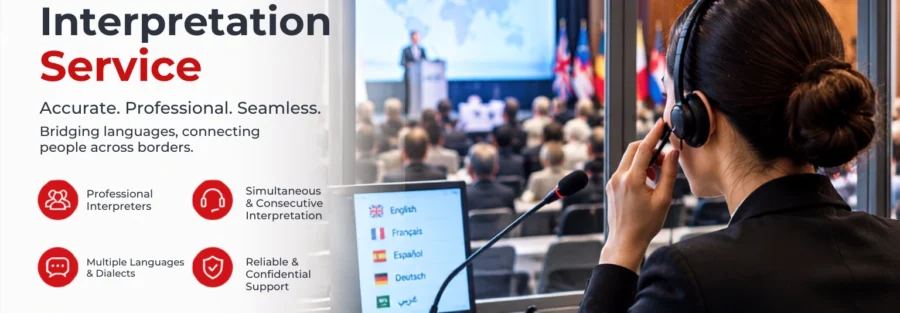
Conference interpreters communicate the meaning of a speaker’s message to the audience. They communicate the speaker’s intended meaning, unspoken elements, subtle nuances, and overall message to the audience. Simultaneous interpreters communicate the message while the speaker continues talking. It therefore follows that such an interpreter requires good hearing, verbal production and ability to concentrate skills:
The Nature of Conference Interpreting Assignments
Before an event, interpreters review the event brief, agenda, presenter slides, biographies, and subject-specific terminology. This preparation helps interpreters understand the event’s context and prepare the relevant terminology. In particular, technical, medical, legal, or business conferences require special attention to specific jargon.
Choosing Between Simultaneous and Consecutive Type of Interpretation
The simultaneous mode of interpretation is completely different to the consecutive mode and has completely different strengths. This type of interpretation is most widely used for big conferences and international meetings as it does not break up presentations, question & answer sessions or speeches. In contrast the consecutive mode can be used for meetings, conversations and interviews in order to allow the people involved to easily receive the translated message.
Providing Better Language Access During Events
Language barriers should not prevent events from engaging onsite and remote delegates, viewers, speakers, and presenters.For this purpose, remote meeting participants and onsite attendees who speak the lingua franca-English-are able to understand the event. Simultaneous interpretation helps all participants take part fully in discussion panels, presentations, question-and-answer sessions, and other event activities.